Why retailers are well positioned to win the credit relationship
Credit
Issuing & processing
Program management
BNPL
Embedded finance
Commercial
Consumer
Retail
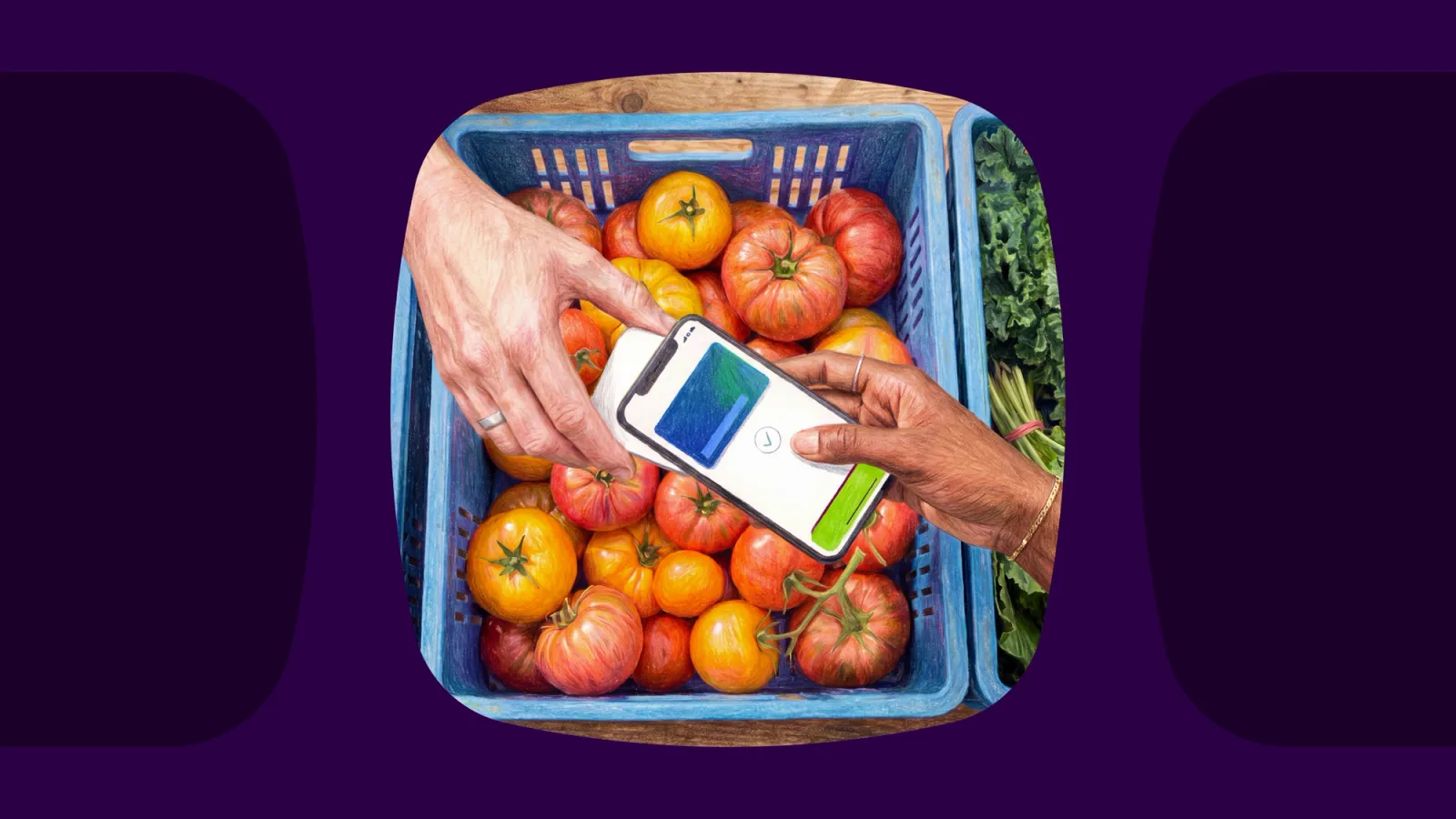
Summary: Consumer credit behavior is fragmenting as shoppers assemble personal portfolios of debit, credit, and BNPL, choosing how to pay based on context rather than loyalty to one card. Retailers are uniquely positioned to capture this shift. The solution is a flexible credential, a single card that lets users choose their payment method (debit, credit, or installments) at the moment of purchase.
Consumer credit behavior is fragmenting. People now assemble debit, credit, and BNPL into a personal portfolio and move between them by context rather than committing to one card. That is a risk for static loyalty and co-brand programs, but presents an opportunity for retailers specifically.
Retail already functions as many shoppers' first entry point into a broader financial relationship, and consumers say they trust large retailers for financial services more than most non-bank categories. Marqeta's 2026 State of Credit research also shows that 47% of consumers say they'd trust a large retailer for financial services.
Two realities shaping retail credit today
Most retail card programs were built around a simple assumption: give someone a card, get their loyalty, done. Shoppers stopped operating that way years ago, and the research on how they actually use credit makes the gap explicit.
Two things are true at the same time right now:
- Consumer credit behavior is more fragmented than ever, which punishes any program built around a single, static product.
- Retail is one of the few categories positioned to absorb that fragmentation, because of where retail already sits in a shopper's financial life.
Put those two facts together and the opportunity comes into focus.
The loyalty math retail can't out-spend
Retailers have leaned on loyalty programs to make an increasingly expensive customer worth acquiring. The programs are not holding. Consumers now belong to more than a dozen loyalty programs each, with engagement sliding for years, and 81% of Gen Z and Millennials switched brands in the past year.
The usual response is to add another tier or a better welcome bonus. That has not reversed the decline, because a free program costs nothing to leave. A shopper can always be outbid by the retailer down the road running the same playbook with a slightly bigger number. Points alone were never going to win a relationship this fluid.
Shoppers don't carry one card; they carry a portfolio
The State of Credit research is direct about what has changed. Credit is no longer something a customer either has or doesn't have. It is a set of tools people assemble and move between depending on what they are buying, what their cash flow looks like that month, and where they are in life.
Key findings on consumer payment behavior:
- 66% of consumers own a credit card, and 57% of those carry more than one
- 79% of BNPL users keep using BNPL even when they have a credit card, because the two do different jobs
- 85% weigh multiple factors before deciding how to pay for a given transaction
- 59% used both debit and credit within a single 90-day window
This is deliberate, contextual behavior. It does not fit inside a single-mode card, and a program built as if it does will keep losing shoppers at the exact moments it was supposed to win them.
Retail already owns the front door
Here is the part that changes the calculation for retail. The credit card is often where a broader financial relationship begins, and retail is well placed to be the one that opens that door.
Among consumers who hold multiple financial products with one provider, 33% started with the credit card and added the rest later. Among 18 to 34 year olds, that jumps to 60%. Younger shoppers, in particular, treat their first card with a brand as the entry point to everything else that provider offers.
That reframes what a co-brand card is worth. It is not just an interchange line and a rewards liability. It is an acquisition channel for a durable relationship, provided there is somewhere for that relationship to go. And retail has a trust advantage most non-bank categories don't: 47% of consumers say they'd trust a large retailer for financial services, and the top drivers of that trust; strong brand reputation and transparent terms; are things a good retailer already has before it ever issues a card.
The demand is concentrated where retail's growth is
The State of Credit Report also revealed that the appetite for a more flexible card is not evenly spread. It concentrates on the demographic retail is fighting hardest to win, and it shows up on the business side of the research too.
Consumer demand by age:
- 48% of consumers aged 18–44 want a card that can switch between debit, credit, and BNPL at the point of purchase
- 23% of those 65 and older want the same capability
- Among 18–44 year olds who already carry multiple cards, 71% want to consolidate onto one credential
Business demand by industry:
That last point is worth thinking over. It is not just that retail's own shoppers are asking for this. Retail businesses themselves, as prospective card program operators, are the single most receptive industry to the idea. The demand exists on both sides of the counter.
What is a flexible credential?
Definition: A flexible credential is a single card that lets a consumer choose, at the moment of purchase, whether to pay via debit, credit, or installments. The cardholder does not need multiple cards or separate apps. The same credential dynamically routes the transaction based on their selection.
How companies build cards that let users choose how to pay at checkout
Building a flexible credential requires a modern card-issuing platform that supports real-time transaction routing and multiple funding sources on a single card. The issuer processor must be able to:
- Combine debit, credit, and more into a single credential
- Dynamically route transaction to the selected funding source in real time
- Manage authorization, clearing, and settlement across different payment rails
- Maintain compliance with network rules for each payment type
This architecture differs from traditional card programs, where one card equals one funding source. Flexible credentials require the issuer processor to make routing decisions during the authorization window, typically under two seconds.
What flexible credentials enable for retailers
With all of this context:
- The front door gets harder to close. A card that does financing and real rewards and works everywhere the customer spends earns top-of-wallet status. The kind of relationship that actually costs something to leave.
- The portfolio comes under one roof. Instead of asking a shopper to carry a debit card, a credit card, and a separate BNPL app, one credential does all three jobs.
- The BNPL habit comes home. Rather than a third party owning the installment relationship, that financing sits inside the retailer's own card, so the data and the loyalty come back to the brand.
- A decline stops being a dead end. A flexible program can offer a build-toward-qualifying alternative in the moment of a declined transaction, instead of silence, which matters given how many applicants are being turned away with no path forward.
- The cart gets bigger and more frequent. When debit, credit, and installments all live on one card, a shopper doesn't have to downsize a purchase to fit whatever payment method they happen to have on hand. More of them complete the higher-priced purchase instead of walking away from it, which shows up as both more transactions and a higher average transaction value.
The spend data is another prize
The relationship is the headline benefit, but it is not the only one. Every transaction that runs across a flexible credential, whether the shopper chose debit, credit, or installments, moves through the card network, and that generates a live feed of spend data most retailers have never had direct access to before.
That is a different asset than what a typical loyalty database holds. A loyalty program only sees the purchases made at your own registers. A card that travels sees everywhere else the shopper spends too, and each of those off-brand transactions is a signal about how that customer actually lives, not just how they behave inside your four walls.
How retailers can use spend data:
- Rewards that match real behavior, not a flat cashback rate built for an average customer who doesn't exist
- Dynamic incentives that shift in real time toward the categories, merchants, or moments that actually move retention, instead of a static rewards table that rarely changes
- Personalized cashback and offers informed by whether shoppers lean on credit, debit, or BNPL and when
- New commercial relationships with merchants, since aggregated, permissioned spend insight is something merchant and brand partners will pay for, whether that is co-marketing, targeted offers, or demand signals they can't get anywhere else
Put simply: the flexible credential is the product fix for the behavior problem. The spend data it provides, if a retailer actually builds the muscle to use it, is arguably the bigger long-term asset, because unlike a points balance, it compounds every time the card is used.
The resistance is thinner than it looks
A common objection is that shoppers will not want something new from a retailer. The research says otherwise.
Overcoming initial skepticism:
- When consumers who initially say they are not interested are shown the concrete value (fewer cards to manage and more control at checkout; 81% turn around and see real benefits worth considering)
- Among consumers already interested in flexible credentials, 67% say it would replace their current debit card, 71% their current credit card, and 71% would stop using separate BNPL apps
"Not interested" tends to mean "not yet known," which is a positioning problem, not a product-market fit problem.
Reaching underserved segments (stats from the 2026 State of Credit):
There is also a real bridge for shoppers retail is currently losing at the credit decision. For consumers who want the brand relationship but cannot or do not want traditional credit, co-brand debit paired with BNPL tests well:
- 33% of consumers are interested in a co-brand debit card, rising to 41% among 18–44 year olds
- Interest in co-brand debit with BNPL reaches 53% of 25–34 year olds who don't qualify for credit
- Pair that with real incentives and 65% of previously neutral consumers move into consideration
Even a won customer can be lost at checkout
None of this matters if the flexibility disappears right before the sale clears. Roughly 70% of e-commerce carts are abandoned, and payment friction is one of the leading causes. 60% of consumers aged 25–44 say they want more flexible payment options at the point of decision, and giving it to them recovers revenue a retailer already spent to earn.
The case for retail, in a nutshell
Consumer credit behavior has fragmented faster than most retail card programs have adapted. That would be a problem for any category. For retail, it is an opening, because retail already has the trust, the front-door position, and, on the business side, the appetite to build the program that matches how shoppers behave now, rather than asking shoppers to fit a program built for how they used to spend.
- Want to see what a flexible credential could do for your program?
- Contact us to talk through the fit for your brand.
- See what else Marqeta can offer retailers.